I did not learn this from a textbook. I learned it from a game that was not trying to persuade me.
In civilization and city-building simulations, the rules are blunt. You place a town. You assign workers. You watch numbers stabilize or collapse. The game does not pretend people are free. It does not romanticize "choice." It does not moralize outcomes.
It simply shows you what a system requires.
At first, it feels harmless. You drop a town center. You build a log mill. You assign a worker to it. You build a farm. You assign someone there too. You quarry stone. You mine metal. You build housing. You keep the lights on, so to speak, in a world where light is measured in wood and food and labor.
Food. Wood. Stone. Metal.
Those are not political ideas. They are the backbone. They are the material inputs that keep the civilization alive and moving forward. And the first thing the game teaches you is that these inputs are non-negotiable.
Someone must cut the trees. Someone must grow the food. Someone must haul what is extracted into what is useful.
You cannot not have somebody at the log mill.
The log mill does not "solve itself." The farm does not become philosophical. The quarry does not stop needing hands because you have a vision for your society. In these games, the survival layer is always there, always hungry, always demanding.
Then the city grows, and the math tightens.
Every new person requires food. Food requires workers. Workers require housing. Housing requires materials. Materials require workers.
And each addition to society increases the demand for the very labor that sustains it. If you add one person, you do not merely add one person. You add a mouth, a bed, a tool, a heat source, an infrastructure burden. Growth creates its own demand. It pulls more people into the base layer just to keep the base layer from cracking.
So you start to notice something that is not framed as ideology in the game, but as necessity:
Most of your society will be locked into high-labor, high-output roles that are never meant to progress.
Not because the game is cruel. Because the system is built on throughput.
There is always a shortage somewhere. Always a chain that can break. Always an input that runs behind. And the quickest way to ruin your civilization is to let too many people leave the survival layer at once.
You can build universities and temples and courts and monuments. You can create upper tiers — specialists, administrators, elites — people whose work is not directly tied to extracting food from soil or wood from trees. But the game makes something clear: those layers only exist because the base layer holds.
If the base layer wavers, everything wavers.
And this is where the game becomes unsettling, because it teaches you a truth you cannot easily unlearn.
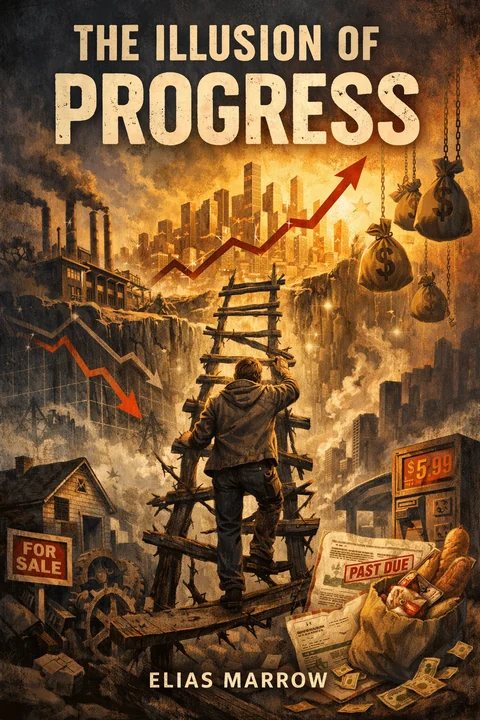
Class is not an accident. Class is a stabilizing mechanism.
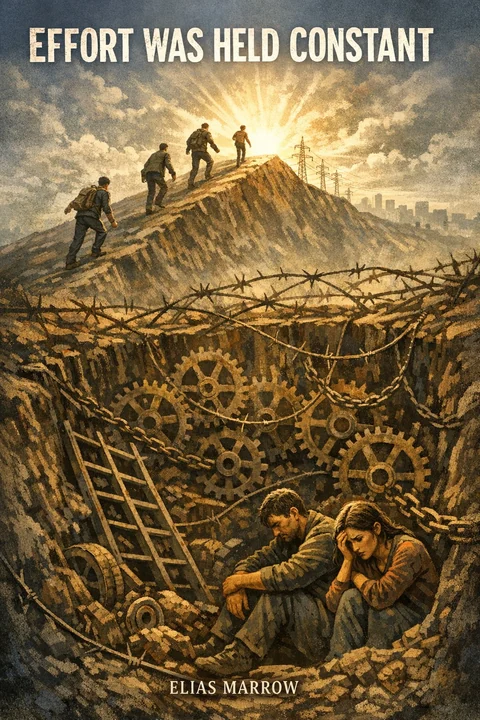
You may tell yourself you are building upward. But what you are actually doing is holding most people in place so a smaller number can move.
If everyone advances, the system breaks.
This is not rhetoric. It is not a "take." It is what the mechanics demand.
And if we want a different outcome in reality, we would have to design systems that do not require a permanent low tier to stay stable.
That is the harder game. And it is the one we keep refusing to admit we are playing.