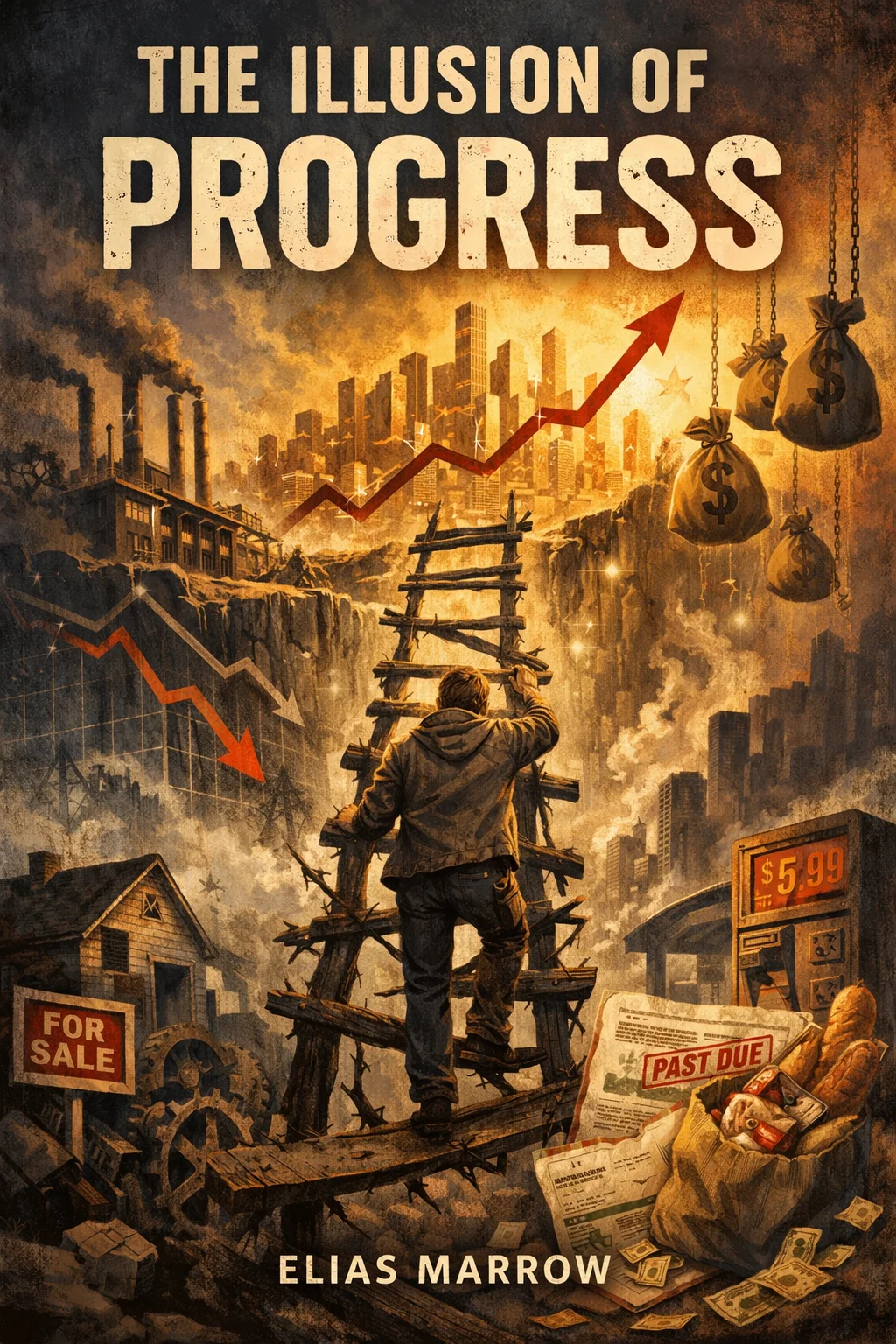
They tell us we are moving forward.
The numbers say so. Wages are higher than they were a decade ago. The charts slope upward. The headlines repeat it until it becomes ambient truth: growth, recovery, resilience. If you are struggling, they imply, it must be personal.
But progress, when real, does not need to be explained.
Over the last ten years, wages have risen roughly thirty to forty percent. In the same span, housing costs have nearly doubled. Rent has climbed faster than pay. Healthcare has outpaced both. Food and energy — things you cannot opt out of — have risen steadily.
This is the first lie: that progress can be measured in isolation.
Wages are never experienced alone. They exist only in relation to what they must purchase. A raise that does not keep pace with shelter is not advancement; it is delay.
They know this. That is why the language is careful.
They do not speak of real wages. They speak of earnings. They do not speak of purchasing power. They speak of opportunity.
This is not incompetence. It is design.
Productivity has continued to rise while compensation has not followed. Workers produce more value per hour than they did ten years ago, yet the distance between what they create and what they receive widens each year.
This gap is called many things — but never what it is: extraction.
Rhetoric is how extraction becomes polite.
If progress were measured honestly, it would reveal something intolerable: growth is real, but it is selective.
Assets appreciate. Labor treads water. Debt fills the space between.
The illusion of progress exists to make extraction tolerable.
Once you see it, the rhetoric loses its power.
Progress did not disappear. It was redirected.