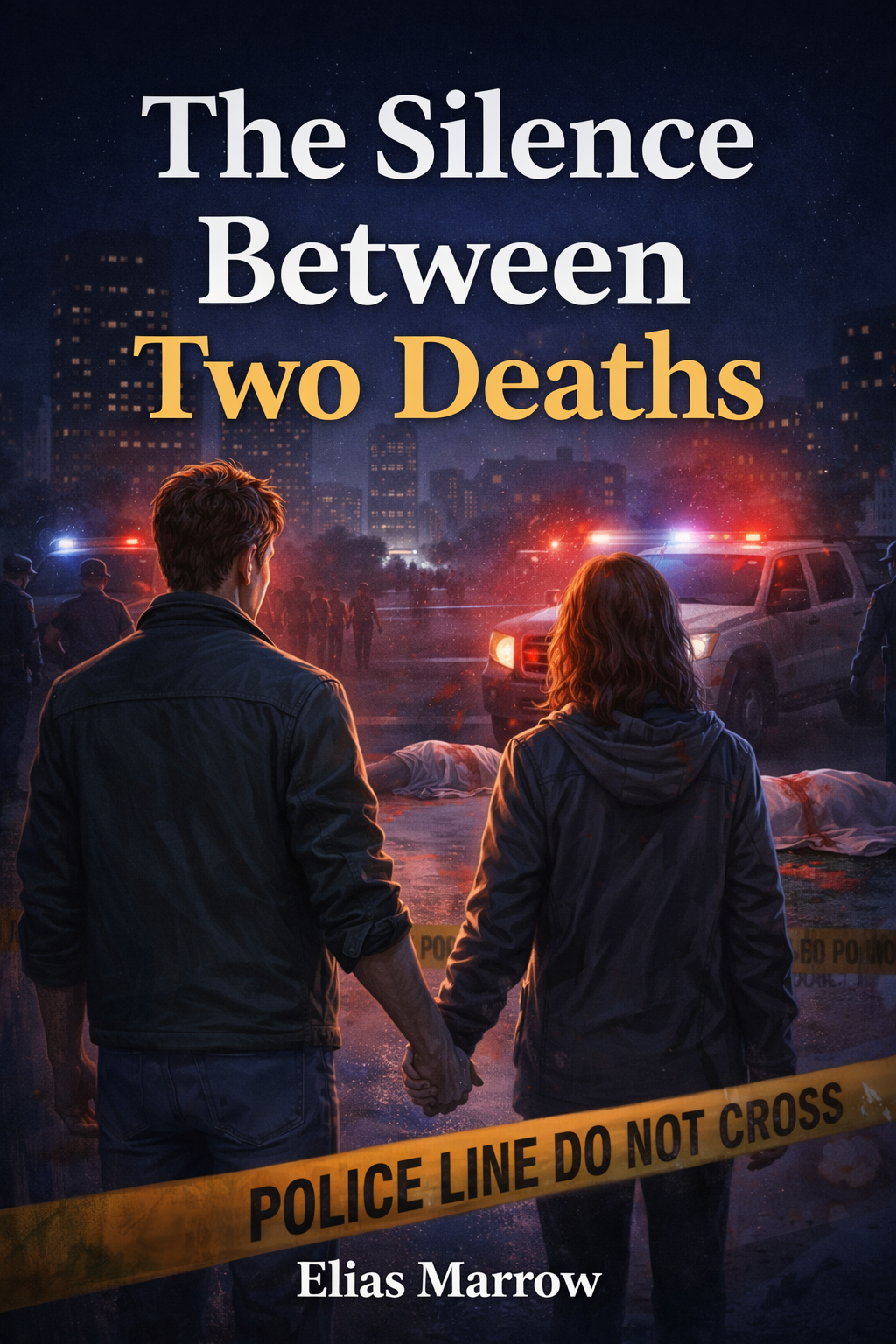
I noticed the absence before I noticed the event.
Not because nothing had happened—but because something had, and it was not appearing where it usually would.
My feed, which has learned me well, did not react.
There was no flood.
No repetition.
No unavoidable confrontation.
I had to scroll.
Then search.
Then confirm that what I was sensing was real.
This was not the first death.
It was the second.
And that difference mattered more than anyone wants to admit.
When Nicole was killed, the system responded immediately.
The images circulated.
The clips repeated.
The commentary stacked itself neatly into place.
Outrage arrived preformatted. Participation was effortless. You did not have to decide how to feel—only whether to express it publicly.
This time, the victim was Alex.
And the system hesitated.
Moral Weight Is Not What Drives Visibility
There is a comforting fiction that social attention is proportional to harm. That the more unjust an act, the more visible it becomes. That exposure is a kind of moral accounting.
It is not.
Visibility is governed by temptation.
Not ethical temptation—engagement temptation.
How easy it is to react.
How predictable the response will be.
How safely it signals identity without consequence.
Nicole’s death fit a template the system already knew how to distribute. Engagement required no risk. The moral language was preapproved. Reaction was impulsive.
Alex’s death did not fit.
White.
Male.
Veteran.
Killed by the same apparatus—but now incompatible with the narratives that had just been activated.
To engage meant choosing between contradictions.
To speak meant risking fracture.
So people did what humans do under uncertainty.
They paused.
Hesitation Is Algorithmic Poison
Platforms do not suppress ambiguity.
They starve it.
Algorithms are not ideological. They are predictive. They optimize for velocity—how quickly content produces reaction.
Hesitation introduces delay.
Delay collapses momentum.
Momentum determines amplification.
This creates a subtle filter:
Clarity surges.
Thought stalls.
Conflict disappears.
Alex’s death demanded interpretation before reaction.
Nicole’s did not.
That alone was enough.
Disengagement Is a Rational Choice
Silence here is often misread as apathy.
It is not.
Ambiguous events carry social risk. People conserve attention where outcomes are uncertain. This is not cowardice.
It is adaptation.
But adaptation at scale produces distortion.
The Feedback Loop
Lower temptation to engage leads to lower engagement signals.
Algorithms respond by deprioritizing.
Visibility drops.
Moral urgency follows.
The system does not erase these deaths.
It lets them fall through the cracks created by hesitation.
What This Reveals
The uncomfortable truth is not that people cared less.
It is that systems are built to amplify clarity, not accuracy.
Some deaths are unavoidable.
Others must be searched for.
Not because they mattered less—
but because they asked more of us.
— Elias Marrow