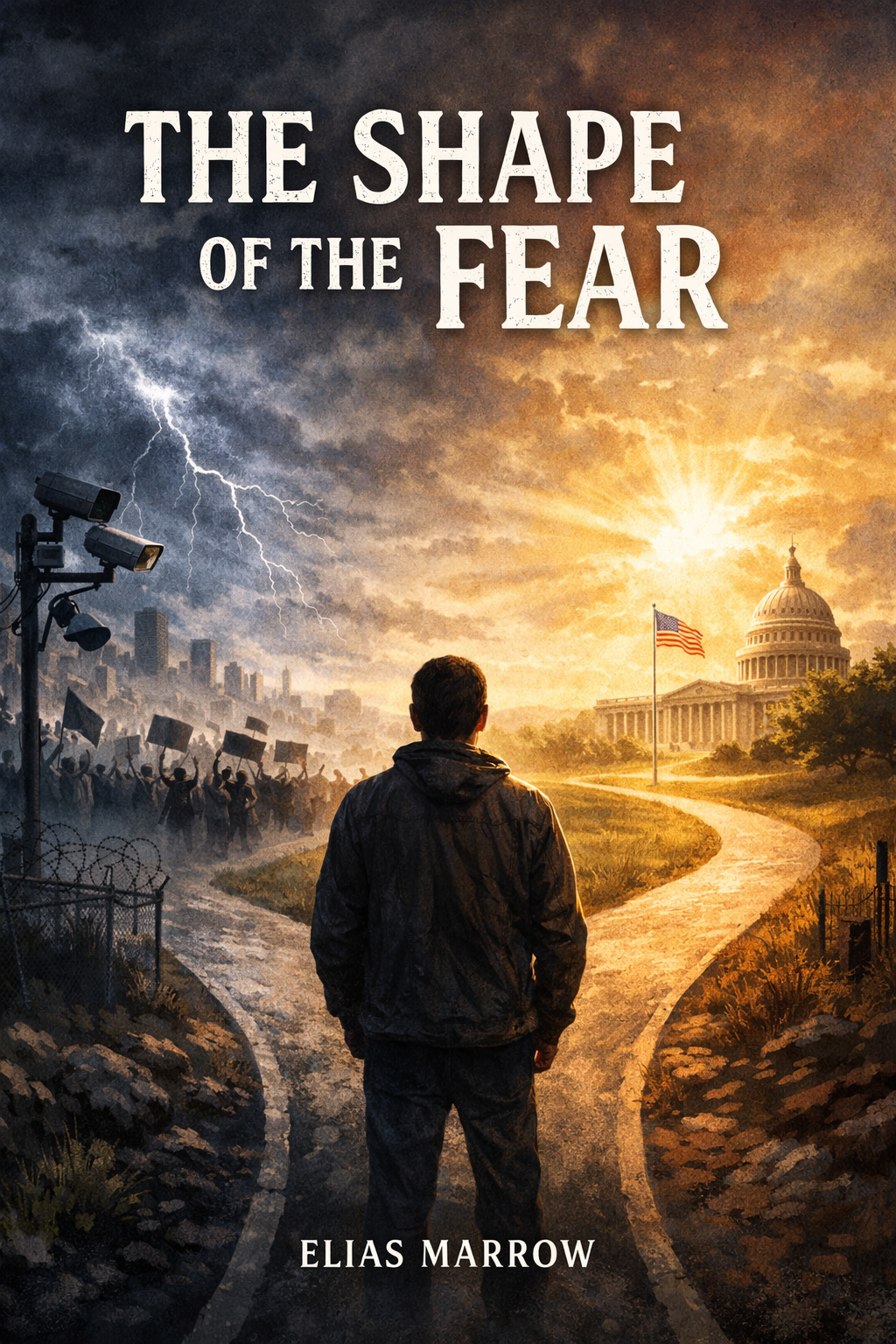
People keep asking whether the country is becoming authoritarian.
They argue about parties, leaders, elections, and laws.
They search for villains.
They debate intent.
But all of those questions arrive too late.
They assume the outcome is something being imposed, rather than something being chosen.
The truth is quieter, and harder to accept:
Authority is not seized. It is reached for.
Not because people are weak.
Not because they are cruel.
But because under certain conditions, it feels like the only way to make the world predictable again.
Stress Is Real
Start here, because anything else feels dishonest.
Life has become harder.
Housing costs more. Healthcare costs more. Education costs more.
Work is less stable. Debt is normalized. The future feels thinner.
This is not imagined.
It does not require a conspiracy.
Stress emerges naturally when systems are optimized for efficiency instead of resilience, profit instead of slack, growth instead of stability.
But stress alone does not produce authoritarianism.
If it did, every difficult period in history would end the same way.
Something else has to happen.
Uncertainty Breaks Us Before Poverty Does
Stress becomes dangerous when people stop believing problems can be solved together.
When institutions feel slow, distant, or performative.
When media feels reactive rather than clarifying.
When neighbors feel divided into tribes instead of participants.
At that point, coordination collapses.
And when coordination collapses, the human mind does something ancient and rational:
It looks for a single point of control.
Not because people crave domination.
But because coordination is exhausting under uncertainty.
Authority simplifies.
Authority Is a Stress Response
This is the part most people never hear stated plainly.
People do not choose authority because they hate freedom.
They choose it because freedom becomes cognitively expensive when everything feels unstable.
Authority narrows the world.
It reduces ambiguity.
It tells you where responsibility lives.
Under fear, that feels like relief.
This is not ideology.
It is observable behavior.
Across cultures and centuries, the pattern repeats:
When stress is high, uncertainty is high, and coordination feels impossible, people trade autonomy for predictability.
Not forever.
Just long enough to breathe.
Where Fear Enters
Here is the crucial distinction:
Stress is organic.
Fear is shaped.
Fear is stress with a story attached.
It is what happens when hardship is framed as:
existential rather than structural
caused by enemies rather than systems
urgent but unsolvable without obedience
Fear does not require lies.
Only emphasis.
What is repeated.
What is amplified.
What is never resolved.
Fear is cheaper than repair.
Control is cheaper than reform.
So systems under strain do what systems always do:
they select the cheaper stabilizer.
No Master Plan Is Required
This is where people expect a reveal.
There isn’t one.
No secret meetings.
No unified conspiracy.
Just incentives aligning.
Media amplifies what holds attention.
Politics rewards what mobilizes fear.
Institutions preserve themselves before they correct themselves.
None of this requires malice.
Only momentum.
And momentum is enough.
The Quiet Shape of Loss
Authoritarianism rarely arrives in boots and banners.
It arrives as “temporary measures.”
As “necessary tradeoffs.”
As “common sense.”
Elections continue.
Courts still exist.
Daily life feels familiar.
What changes is not the surface.
It is the range of what is allowed to be questioned.
Choice does not disappear.
Option sets shrink.
Why This Is Not Fate
Here is the part that matters.
When fear decreases—without denying stress—everything changes.
When problems are named clearly rather than dramatized.
When institutions communicate competence instead of urgency.
When coordination feels possible again.
The pull toward authority weakens.
Not because people become better.
But because fear loses its grip on the steering wheel.
Fear Is the Steering Wheel
Most people think power lives in leaders or laws.
It doesn’t.
Power lives in what people are afraid of.
Fear determines:
how much control feels acceptable
how much ambiguity feels tolerable
how much freedom feels safe
When fear is unexamined, it drives.
When fear is understood, it loses leverage.
The Choice We Actually Have
This is not a call to panic.
It is not a call to protest.
It is not a call to trust blindly.
It is a call to refuse fear as the default lens.
To ask, every time urgency is offered:
Is this stress real?
Is this framing necessary?
Does this require control, or coordination?
Because the most dangerous thing is not authoritarianism.
It is believing we had no choice but to accept it.
We do.
But only if we understand what has been guiding our hand.
The Quiet Work Ahead
Democracy does not end in flames.
It erodes in reasonable compromises made under pressure.
The work now is not to shout louder.
It is to explain better.
To lower fear without denying reality.
To restore coordination before people beg to surrender it.
To speak clearly enough that panic no longer feels like clarity.
That is how the wheel is turned.
Not by force.
But by understanding what has been turning it all along.