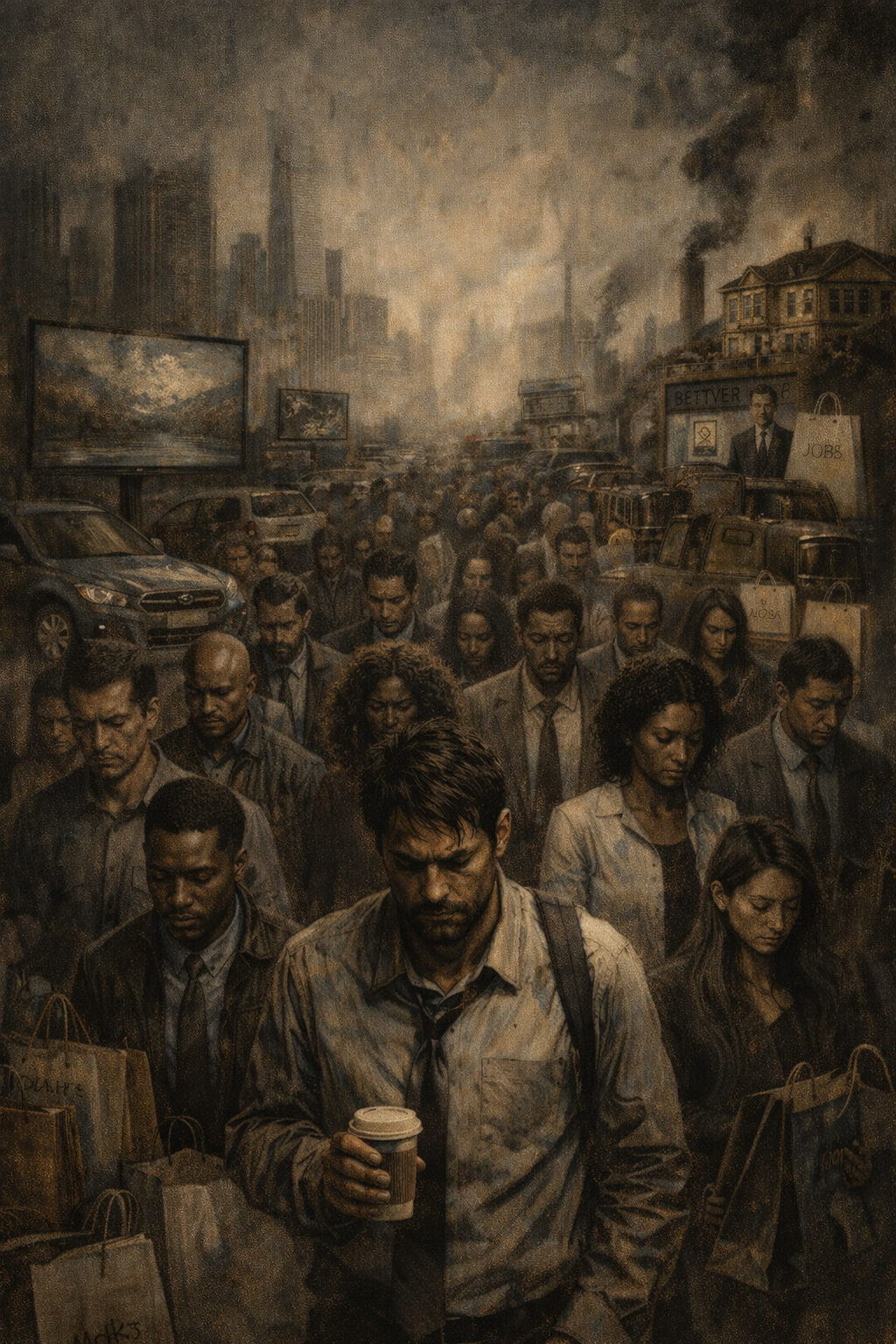
They say the system is unjust.
They say it at dinner tables, in comment sections, in passing conversations between errands. They say it with conviction, with heat, with a kind of practiced exhaustion.
They name the greed.
They name the corruption.
They name the imbalance as if naming it were resistance.
And then they wake up early.
They go where they are told the opportunity is.
They compete for positions that require the same obedience they condemn. They measure themselves against salaries, square footage, trim packages, screen size, visibility.
They say the game is rigged.
Then they ask for better odds.
Their complaints are loud, but their participation is precise.
They finance what they resent.
Upgrade what they distrust.
Admire what they claim to despise.
More cars.
More clothes.
Bigger house.
Bigger television.
Better title.
Better seat at the same table.
The system does not need their praise.
It runs on their energy.
It is fed not by agreement but by appetite.
They condemn it in language, but in action they nourish it. Not because they are evil. Not because they are blind. But because the same instinct that makes them angry is the one that makes them reach.
Security.
Status.
Comfort.
Longevity.
The system promises all of it, just enough to keep them circling.
And so they circle.
They protest exploitation while optimizing themselves for it. They resent the hierarchy while climbing carefully within it. They call it broken, but they fear what would happen if it stopped.
Perhaps the injustice is real.
Perhaps the frustration is justified.
But the deeper truth is quieter:
A structure that feeds on desire does not collapse from criticism. It survives on participation.